Chemical-liquid configuration
The filling setup is selected around the liquid being handled.
Ten-head chemical filling
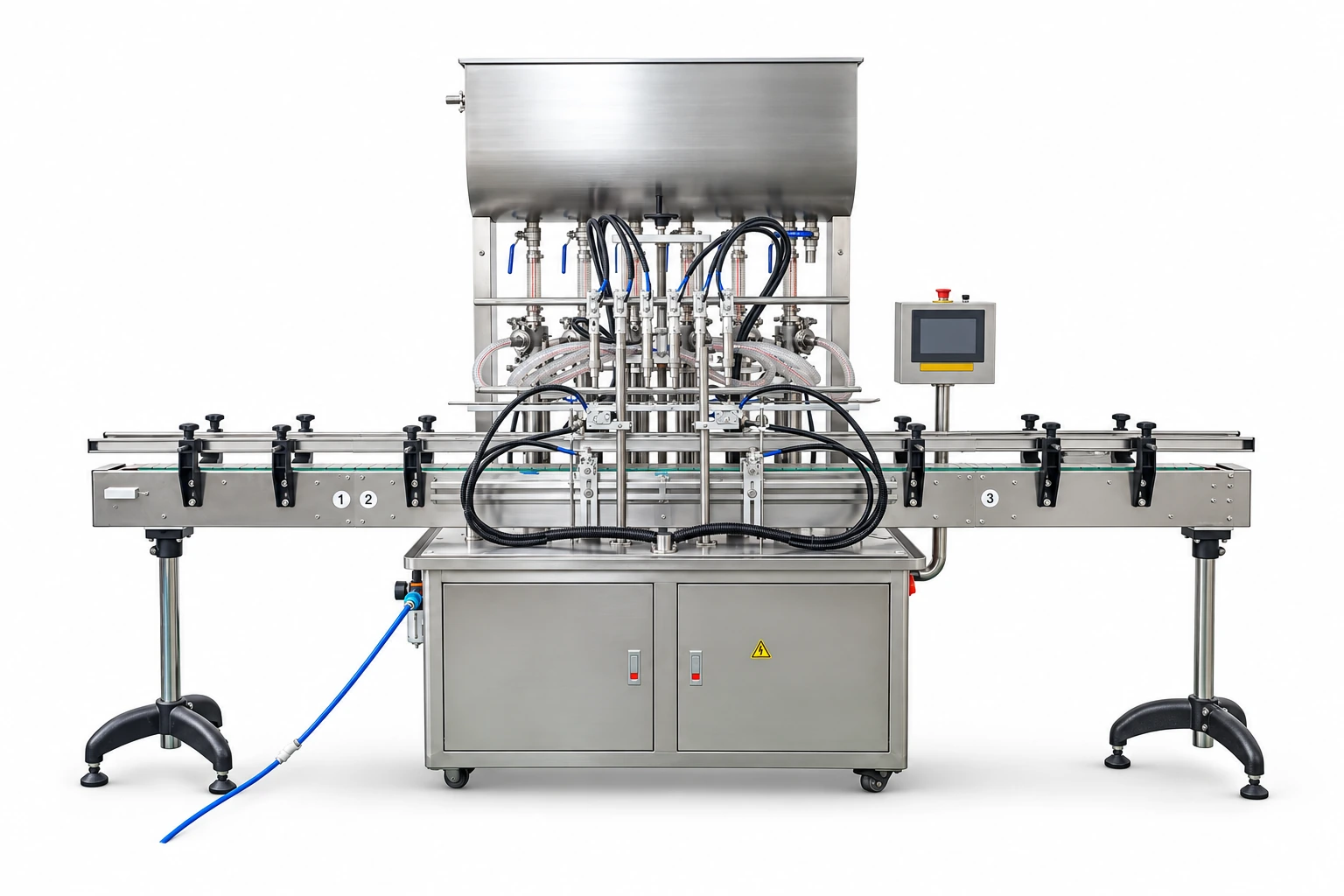
An enclosed ten-head filling machine for corrosive liquid applications, with a bottle conveyor and controls beside the filling chamber.
01 / The machine
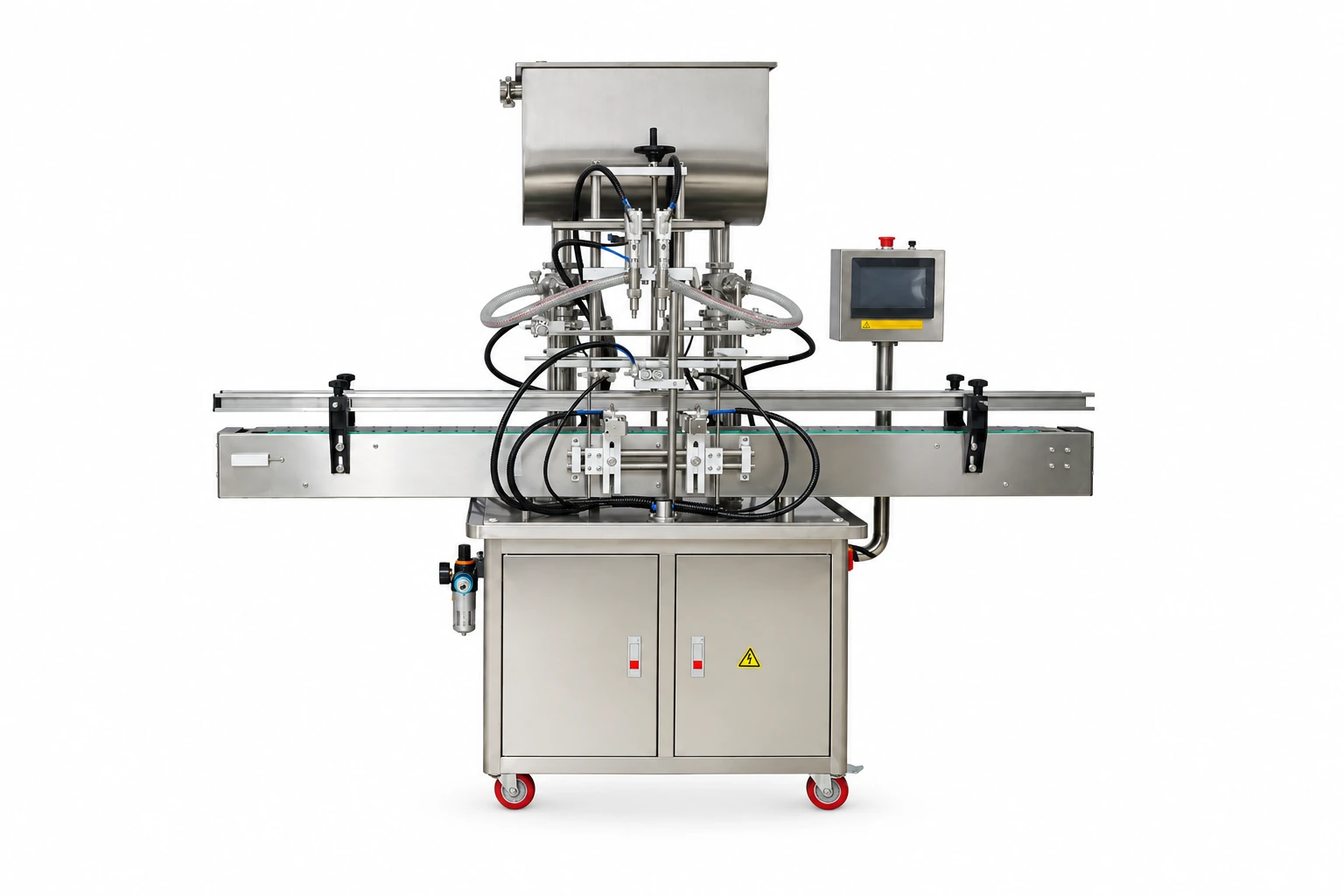
An enclosed, conveyor-fed filling machine designed for chemical-liquid applications. Bottle-positioning components align containers under the filling nozzles. Selection must match the actual formulation to the wetted materials, seals and tubing; the machine name alone does not establish chemical compatibility.
The filling setup is selected around the liquid being handled.
Multiple filling heads serve the bottle conveyor.
The filling mechanism sits inside a guarded cabinet.
02 / In operation
From product preparation
to the next packaging step.
Match wetted materials and seals to the chemical product.
Conveyor guides and bottle stops align the containers at the filling station.
The nozzle bank dispenses before bottles move toward closing.
03 / Technical details
Ten-head chemical filling
| Filling range | 100–1,000 ml |
|---|---|
| Filling speed | 1,800–3,000 bottles/hour |
| Rated power | 1.5 kW |
| Power supply | 220 V |
| Air pressure | 0.6–0.8 MPa |
| Bottle height | 40–250 mm |
| Bottle diameter | 35–100 mm |
| Overall dimensions (L × W × H) | 3,000 × 1,400 × 2,200 mm |
| Machine weight | 450 kg |
Output varies with fill volume and liquid behavior. Share the formulation and safety data sheet for material selection.
04 / Your application
Start with your product and packaging. These details shape the equipment configuration.
Request a quoteSend liquid name and composition; required fill quantity; bottle material and dimensions. Photos or drawings help define the configuration.
The setup is matched to your product and packaging, required output, available space and local power supply. Include each pack size you plan to run.